
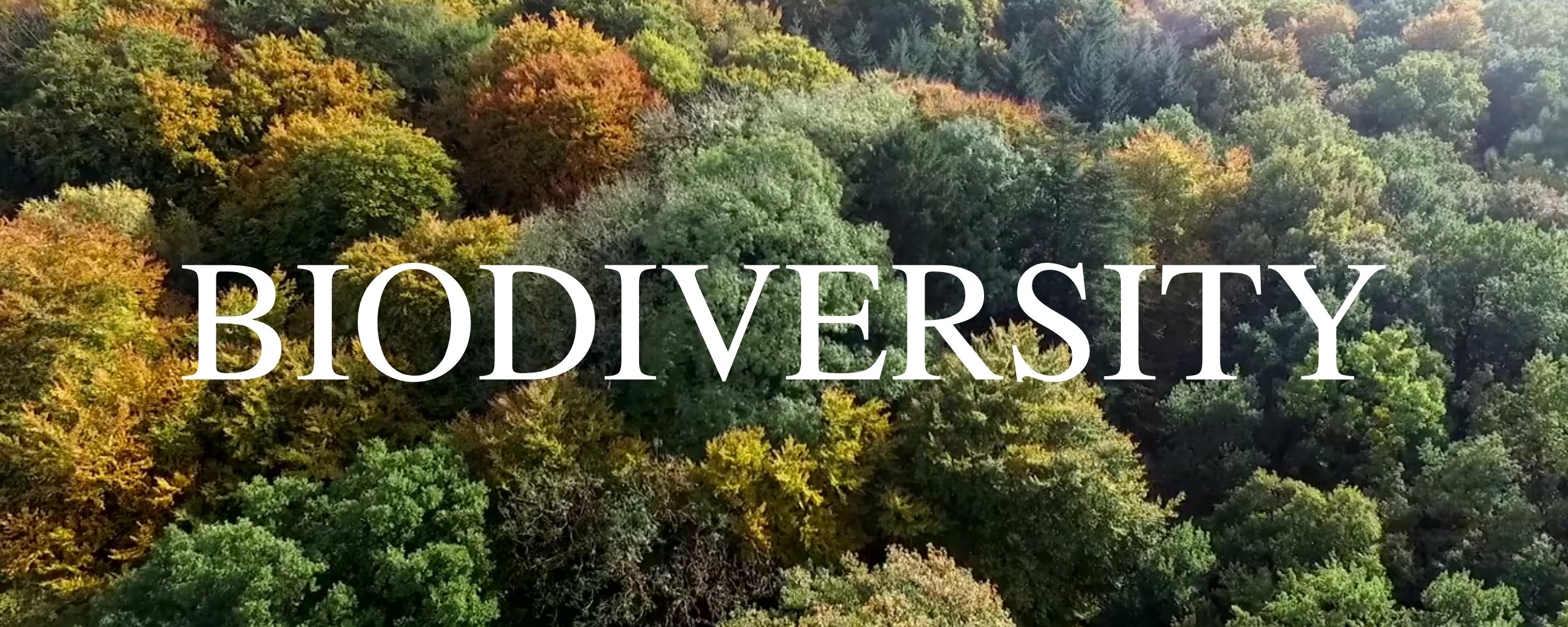
Biodiversity
In the summer of 2020, I noticed something odd about the forest at Hidden Acres Christian Center. Holes were appearing in the branches and trunks of some of the trees, and many of them had also begun to develop big yellow splotches in their bark. They didn’t look healthy. As I looked closer, I noticed a pattern. All the unhealthy trees were the same species: Ash. And suddenly I understood. The forest at Hidden Acres had become infested by the dreaded Emerald Ash Borer beetle.
Native to eastern Asia, the Emerald Ash Borer migrated across the globe in shipping containers and was first detected in North America in 2002 in Michigan. Since then, it has spread across the central United States and Canada, leaving millions of dead ash trees in its wake. By 2022, nearly every ash tree at Hidden Acres (and in the Midwest) was dead. And while that was tragic, it could’ve been so much worse. How? As I later asked a group of campers, “Can you imagine what would’ve happened if every tree had been an ash tree?”
The hero of this story was biodiversity. Because, of course, not every tree is an ash tree, so not every tree died. Oaks, elms, maples, hickories, walnuts, pines, cedars, sycamores, beeches, birches, cottonwoods, ironwoods, basswoods, they’re all still here! A forest with only one kind of tree would be incredibly vulnerable to a pest like the Emerald Ash Borer. We need forests with a rich diversity of species, and the continued presence of the forest at Hidden Acres is a testament to that.
So what does this have to do with the church? In 1 Corinthians 12, the Apostle Paul uses the analogy of a body to talk about the church:
- For just as the body is one and has many members, and all the members of the body, though many, are one body, so it is with Christ. (v. 12)
- For the body does not consist of one member but of many. (v. 14)
- But as it is, God arranged the members in the body, each one of them, as he chose. If all were a single member, where would the body be? As it is, there are many parts, yet one body. (v. 18-20)
His point is that God arranged the body with many diverse members so that it would be stronger and more capable of doing what he created it to do. A whole body made of only eyeballs (or fingernails or gallbladders) would not only be gross, it would be useless. To do what we were created to do, we need the other members of our “church body” just like a forest needs different kinds of trees, or a mosaic needs different colors. What are we created to do? Advance the Great Commission by making disciples of all peoples from all nations.
As you interact with other believers this weekend, make the effort to see them with the eyes of biodiversity. Their presence makes the whole community stronger. Not only do we protect each other from destructive pests like loneliness and pride, but every single believer has a unique experience of God to share with others, a unique story of God’s provision and protection, a unique expression of spiritual gifts that help us see and appreciate God in a new way. Not a new revelation of him (God has already revealed himself through Jesus), but a new experience of his ongoing work in the world.
Brother and sister, your church body needs you. God is infinite, so no finite human can experience all of God in this life. Every one of us gets just a tiny, unique experience of him, like a single piece of an infinitely large puzzle. When we come together and share our pieces of the puzzle, we all get a fuller experience of God because we see him through each other’s eyes. The body becomes stronger, and the forest becomes more beautiful.
For as in one body we have many members, and the members do not all have the same function, so we, though many, are one body in Christ, and individually members one of another. (Romans 12:4–5)