
Four Pictures of God’s Nearness

Friday Highlight – Four Pictures of God’s Nearness
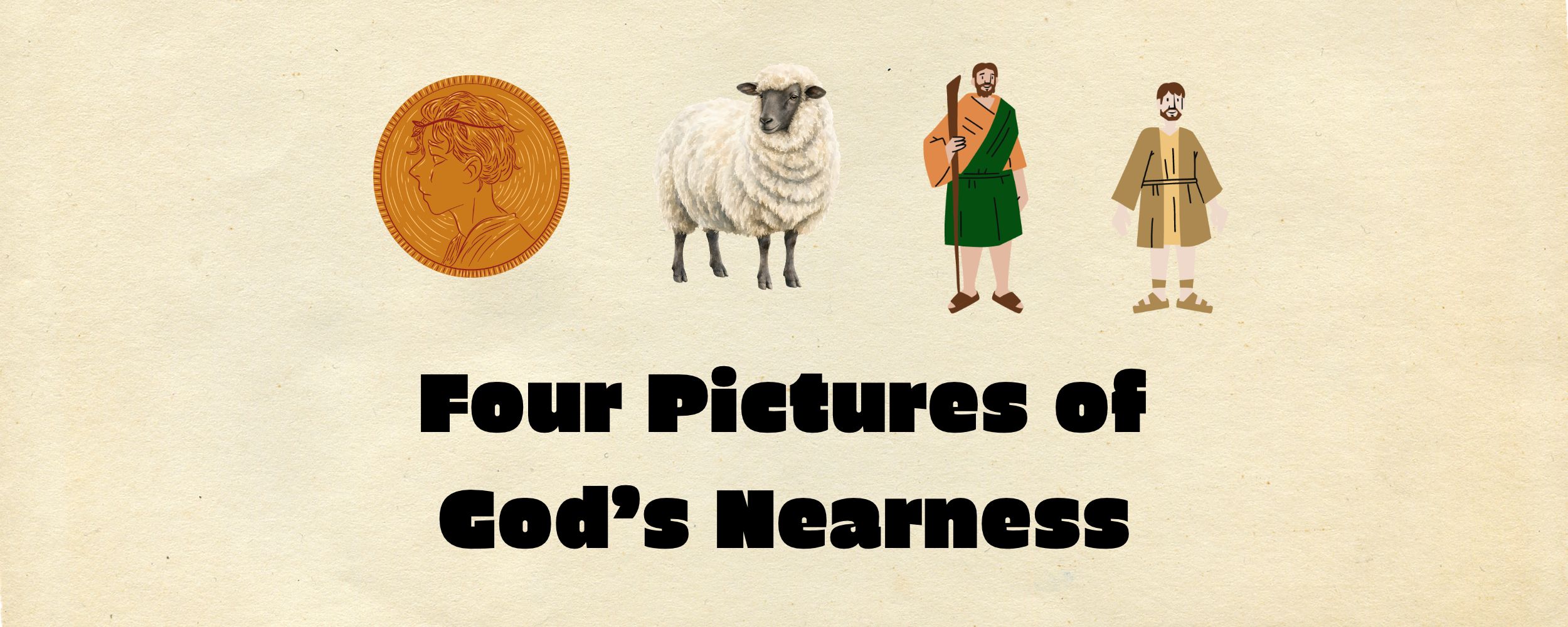
Luke 15 contains three parables that communicate God’s nearness in our distress: The parable of the lost sheep, the parable of the lost coin, and the parable of the prodigal son (or, as Tim Keller calls it in his excellent book Prodigal God, “the parable of the two lost sons”). These three parables are so closely linked that some commentators call them one big parable from three different perspectives. Verses 1-2 give us the background for these stories: Jesus was associating with “tax collectors and sinners,” those who were deemed unworthy of the Lord’s attention, and he gets called out by the religious elite. We’re told they “grumbled” against him, so he tells these parables in quick succession. We can learn a lot by comparing the similarities and differences between the three stories.
In all three, an object or person is lost and then restored, but the manner in which they were lost and restored teaches us how God draws near to us. In the first parable, the sheep wanders off into the open country. We can blame ignorance, stupidity, or stubbornness, but it’s not being willfully disobedient. It’s just a sheep. They wander off. That’s what they do. In the second parable, the coin is lost somewhere in the house. Obviously, an inanimate object cannot willfully run away on its own, or even be ignorant, so this is passive disobedience. Being lost is just something that happened to the coin. The third parable has two sons, and they’re lost in two different ways. The younger brother asks for his inheritance early, essentially saying to his father, “Let’s skip to the part where you’re already dead and I get all your stuff.” He intentionally leaves, squanders his property, and hits rock bottom while feeding pigs (which would be absolutely horrific to 1st century Jews). His lostness is a result of active, willful disobedience, and he breaks his father’s heart when he runs away. He was an active agent in getting himself lost. Thankfully, he comes to his senses and returns home, to the tremendous joy of his father. The older brother, however, refuses to celebrate the prodigal’s return. He stays outside, even though the father begs him to come in. He is also lost, but his lostness is a result of stubborn adherence to “the rules.” He can’t forgive his brother, and he doesn’t think his father should forgive him either.
The differences between the four lost characters reveal the magnitude of our lostness without Christ. Like the coin, we’re all passive victims of Adam’s sin. Every human being is born into a state of lostness, already under the dominion of sin before we make any conscious choice. Like the sheep, we all accidentally wander into sin, but like the younger brother, we also make the conscious choice to run into sin. And like the older brother, we also stubbornly refuse to accept God’s grace and give up our persistent sin. We’ve all been in all four categories, and thankfully we have a Savior who comes to our rescue no matter where we are.
Jesus is the perfect shepherd who leaves the ninety-nine to seek out every lost sheep. He’s the perfect homeowner who tears his house apart to find every lost coin. He’s the perfect father, welcoming home every prodigal younger brother and welcoming in every legalistic older brother.
In all of these examples, Jesus wouldn’t be able to help us if he wasn’t willing to come near us. He had to pick up the sheep and the coin, and he had to put his arms around each son. That’s what we celebrate at Christmas. The coming close of Jesus. Or as theologians say it, “the immanence of Jesus.” He was willing to come close, to leave his heavenly throne and enter into our mess. He who never had a beginning, who dwelt forever in perfect Trinitarian harmony, chose to be born in the dirt. To be forsaken by his father. Why would he do this? Luke 19:10 – For the Son of Man came to seek and to save the lost.
Christian, you were lost. Both actively and passively. Through both ignorance and stubborn disobedience. You were all four lost characters in Luke 15. But Jesus came to earth so he could find you and pull you close. Let him draw near to you today.